Mortgage document AI checks that income, address, and loan terms agree across a 300-page file — not just that each document reads correctly.
Financial statement extraction automates spreading — but the SEC's Inline XBRL mandate never reached the private borrowers who actually need it.
Letters of credit reject 65–80% of first presentations under UCP 600 — AI-driven trade finance document processing is how banks are closing that gap.
Vendor invoice processing breaks at line-item tables and legacy ERP sync — the top G2 complaints, per Gartner's first-ever AP Magic Quadrant for AP software.
SAMA defaults to in-Kingdom hosting for Saudi banks, while CBUAE's Feb 2026 AI guidance governs UAE model oversight — GCC compliant isn't one checkbox.
RBI's 2025 outsourcing directions carry an April 10, 2026 deadline, and DPDP's permissive cross-border default doesn't override India's stricter sector rules.
MAS's Outsourcing Guidelines and its Nov 2025 AI Risk Management consultation both reach past data storage into how a document AI vendor is governed.
DORA's Article 30 and its new subcontracting RTS reach past data storage into where a document AI vendor's model actually runs — here's what to prove.
Tesseract, PaddleOCR, and EasyOCR run entirely on infrastructure you control, but none logs the audit trail EU AI Act Article 12 requires out of the box.
Tesseract, PaddleOCR, EasyOCR, and Docling are the top open source OCR tools in 2026 — how they compare, and what self-hosting alone doesn't solve.
Cloud, VPC, and on-premise document AI deployment models trade off cost, latency, and control differently — here's how to choose for regulated documents.
Amazon Textract spans 15 AWS regions with per-API pricing from $1.50 to $70 per 1,000 pages, but no on-premise or VPC-hosted deployment path exists.
DORA, RBI's outsourcing rules, and SAMA's Cloud Computing Framework all reach past where a document is stored to where the AI reading it actually runs.
Azure AI Document Intelligence prices five separate APIs per page and gates on-premise deployment behind a commitment tier. Here's how it actually works.
Google Document AI processes documents through pretrained parsers in one of nine fixed GCP locations. Here's how it actually works, and where it holds up.
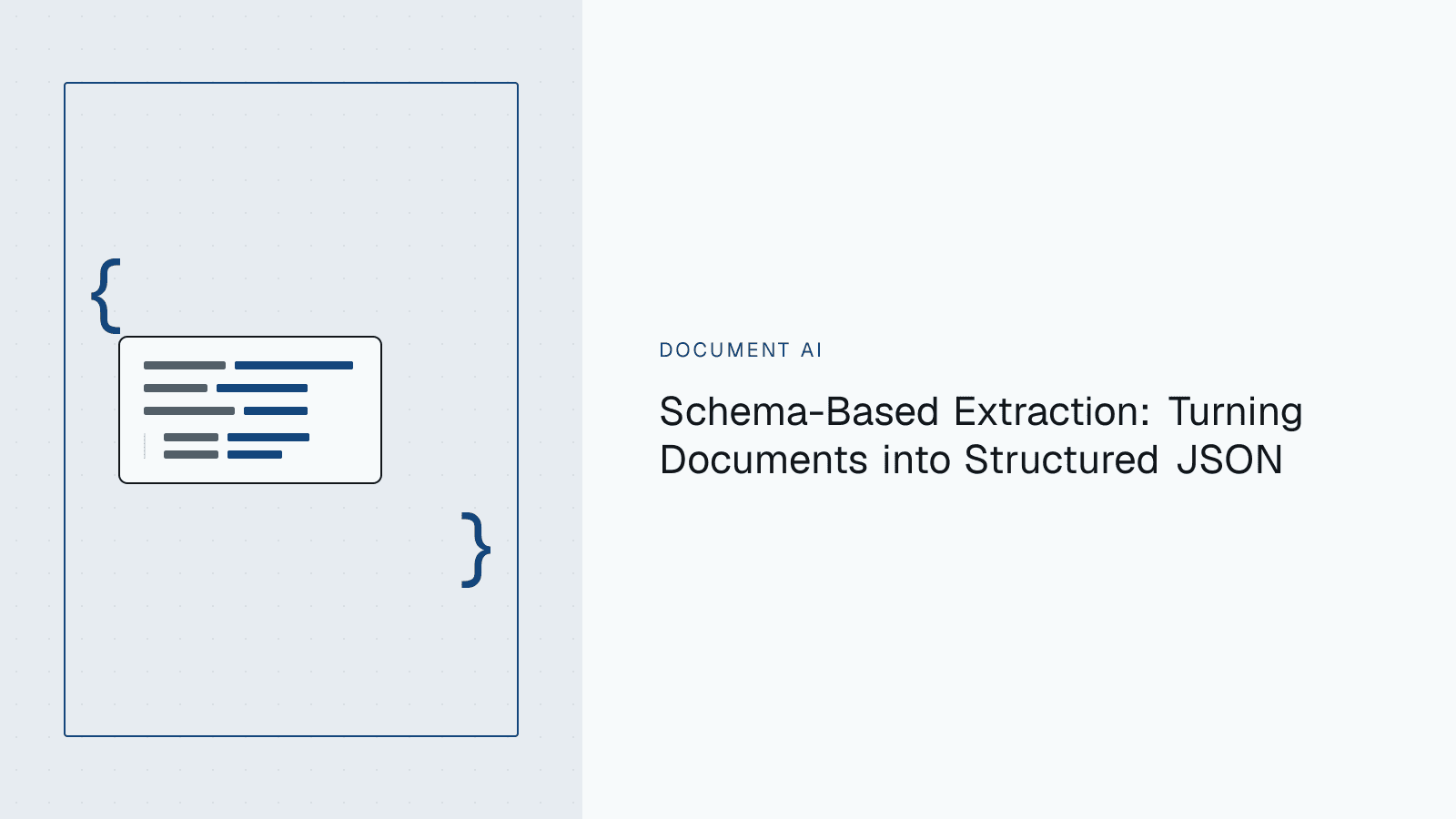
Schema-based extraction lets you define fields once and get structured JSON from any layout — but G2 reviewers flag legacy-system integration as the real gap.
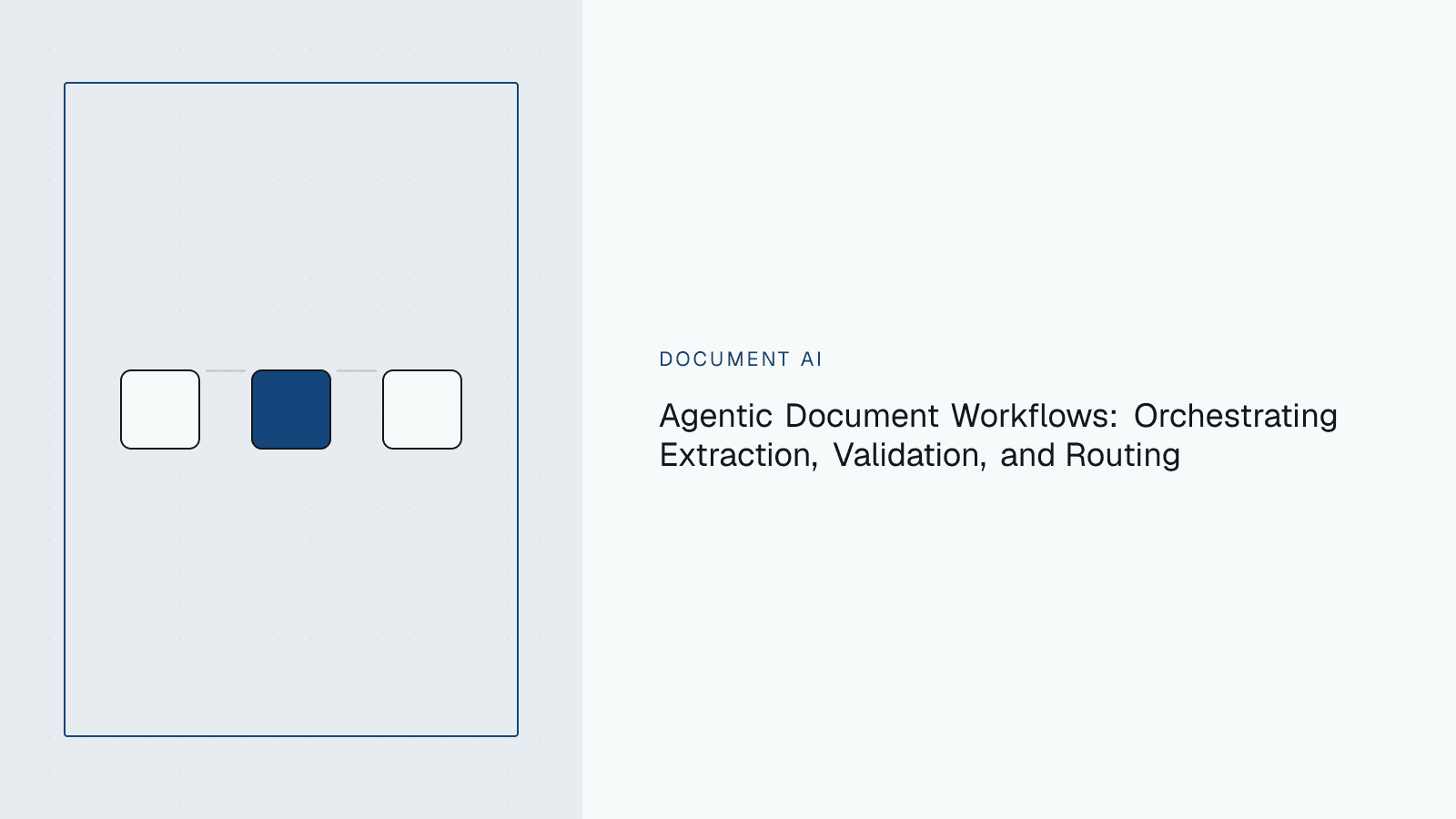
Agentic document workflows orchestrate extraction, validation, and routing — but Gartner expects 40%+ of these projects canceled by 2027 without risk controls.
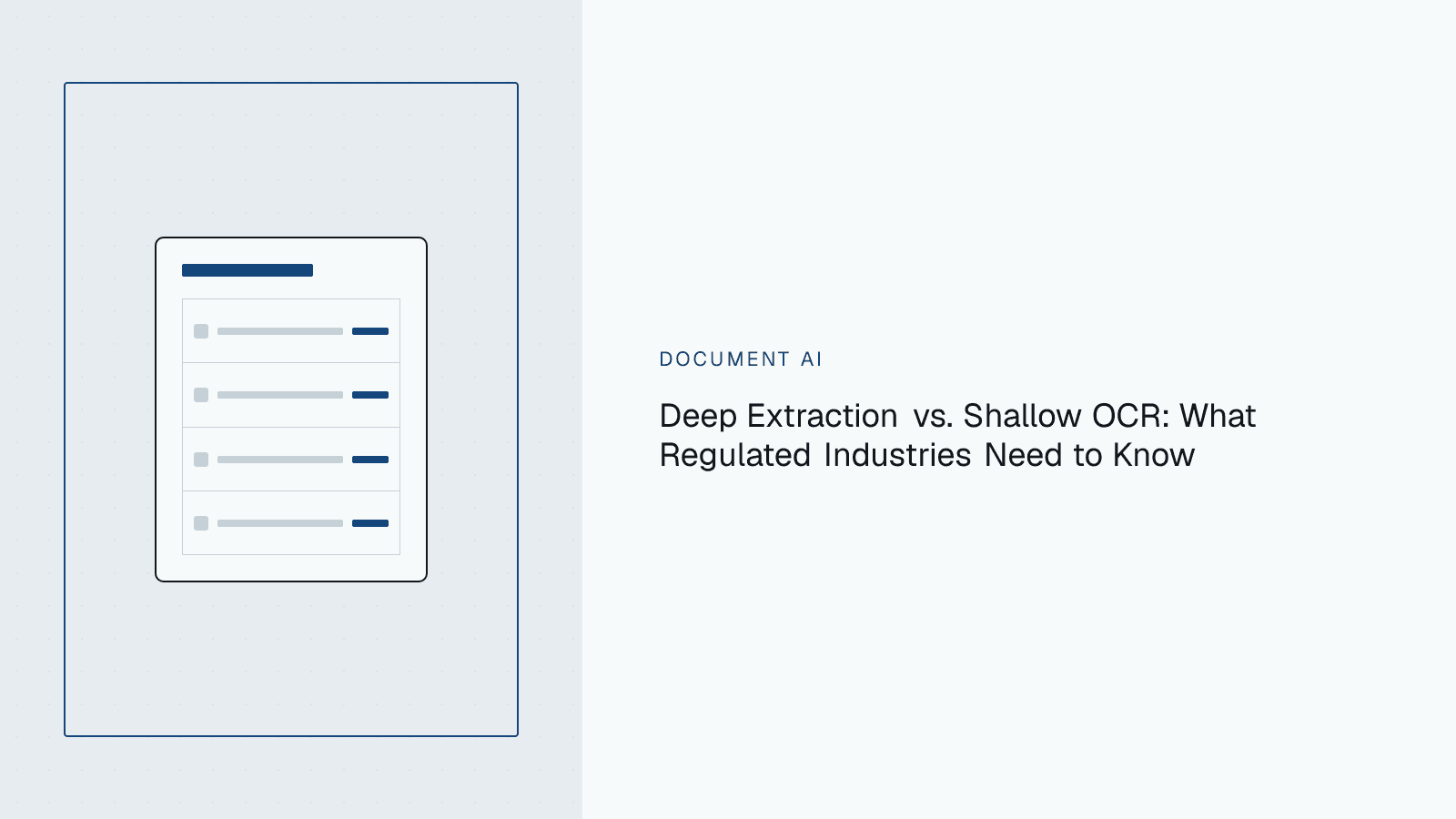
Deep extraction reasons over a document's structure before committing to an answer; shallow OCR reads once and stops. Here's where the gap actually shows up.
Confidence scoring decides which extracted fields skip review — EU AI Act Article 14 now makes that human oversight a legal duty, not just good practice.
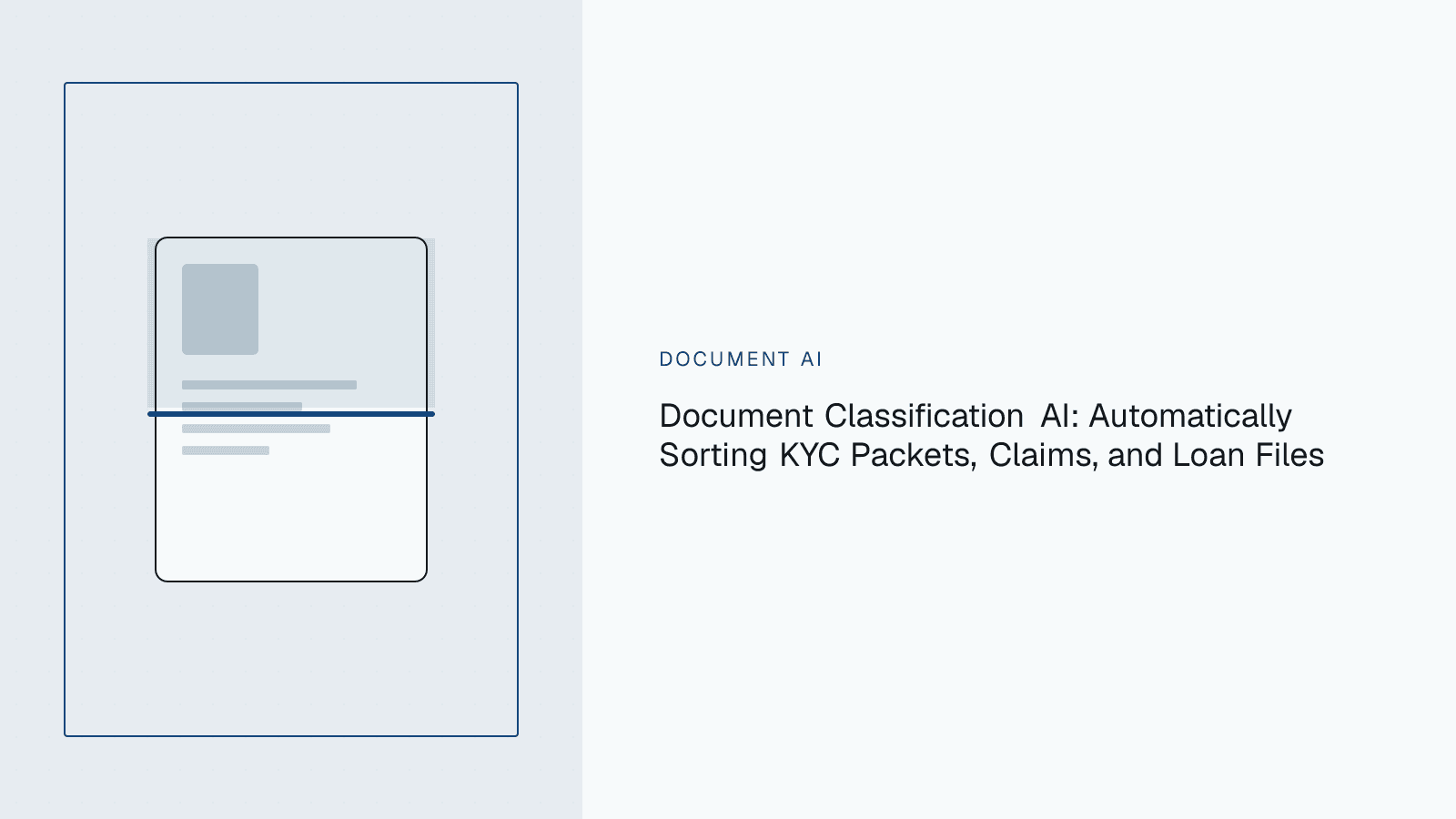
Document classification AI sorts KYC packets, claims bundles, and loan files by type before extraction — where it breaks is the training-data problem.
Zero-shot extraction reads unfamiliar layouts instantly; fine-tuning gets 20% more accurate over time — here's which wins for financial documents.
Agentic document extraction adds a self-correcting reasoning loop OCR never had — catching its own errors before they reach a regulated workflow.
Claims processing document AI extracts claims evidence in minutes, meeting the NAIC's requirement for a documented, reasonable basis behind every decision.
Data residency rules govern where a document sits — not where the AI model reads it. DORA Article 28 holds financial institutions responsible either way.
AI bank statement analysis extracts and verifies income for loan underwriting in minutes, meeting Regulation Z's third-party record standard for lenders.
KYC document automation extracts and cross-checks onboarding documents in minutes, cutting manual review while meeting AMLR Article 20 due diligence rules.
OCR AI combines optical character recognition with machine learning to read, understand, and extract structured data from regulated, document-heavy workflows.